
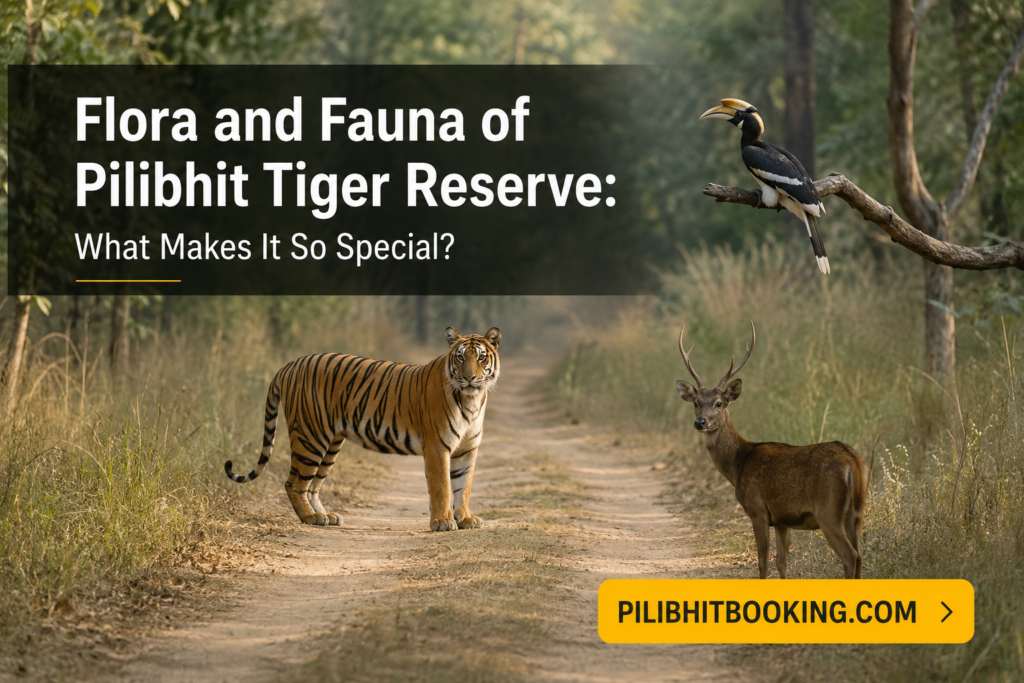
Tucked along the Indo Nepal border, in the green Terai belt of Uttar Pradesh, Pilibhit Tiger Reserve is one of those rare forests that still feels kind of untouched. While plenty of wildlife destinations in India get crowded with tourists, Pilibhit has sort of managed to keep its quiet, raw charm , and that matters. Spread across about 730 square kilometres of sal forest, tall grasslands, rivers and wetlands, this reserve acts as a key part of the Terai Arc Landscape, an ecological corridor shared between India and Nepal, which helps hold up some of the richest biodiversity in North India.
But what really sets Pilibhit apart isn’t just its size or its tiger numbers. It’s the sheer variety of plant and animal life packed into one forest belt. From dense sal canopies to marshy grasslands buzzing with birdlife, the flora and fauna of Pilibhit Tiger Reserve tell the story of a thriving Terai ecosystem. Here’s a closer look at what makes it special.
A Forest Shaped by the Terai Landscape
Pilibhit Tiger Reserve kind of sits in this unique geography pocket where the Himalayan foothills meet the plains, and you can almost feel the change as you go. That mix really shapes the Terai landscape, sort of like a blend of moist deciduous woodlands , open grass stretches , swampy lowlands , and the river systems that keep everything moving. The place became an official Tiger Reserve in 2014 under Project Tiger, still, the forest itself was already hosting wildlife for generations, way before any formal conservation even started.
Rivers like the Sharda and Mala Khannot flow through the reserve, and the Sharda Sagar Dam forms part of its boundary, feeding the wetlands that make Pilibhit such an important habitat for water-dependent species. This blend of forest and water is one of the biggest reasons the reserve supports such a wide range of life.
The Flora of Pilibhit Tiger Reserve
In this area, Sal trees sort of rule the scenery, taking up a big portion of the reserve and turning it into dense woodland that regenerates on its own. If you walk or even drive through the core zone you’ll see how the canopy feels different, thick sal stands give way to more open spots where teak appears, along with khair and sheesham , and also semal and bamboo. In those forest strips there are also a few medicinal plant species, they’re grown there naturally and local people have traditionally used them.
Past the tree line, out in the more open areas, broad grass fields , people here call chaurs, stretch through the reserve. Those grasslands host tall grass kinds that act as shelter and also as foraging ground for deer and other plant-eaters. Near the riverbanks and in the soggy spots too, wetland plants do really well, which sustains aquatic life, and it gives migratory birds a little reason to linger here every winter, like they have a map or something.
This combination of dense forest, open grassland, and wetland vegetation isn’t just visually striking — it’s functionally important. Different species depend on different layers of this habitat, which is exactly why Pilibhit hosts such a diverse animal population.
The Fauna of Pilibhit Tiger Reserve
The Royal Bengal Tiger is, understandably, the reserve’s biggest draw. Pilibhit has seen one of the fastest tiger population recoveries among India’s reserves, growing from just over a dozen tigers at the time of the declaration, to a healthy well-monitored population today. That comeback got the reserve global recognition for its conservation work, with community-led anti-poaching efforts and also habitat restoration.
But tigers are only part of the picture. The reserve also shelters:
- Leopards, mostly spotted near forest edges, and at the grassland border areas sometimes
- Swamp deer, or barasingha, it’s a flagship species for the Terai grasslands which people talk about a lot
- Hog deer, sambar, chital, and nilgai, are usually seen while you’re on safaris
- Sloth bears, plus Indian hyenas, you might find them in quieter forest pockets, not as busy areas
- Asian elephants, particularly near water bodies
- Jackals and wild boars, frequently active around dusk
- Reptiles such as the Indian python, monitor lizard, and turtles
For wildlife photographers, this mix of predators and prey species across open grassland and dense forest makes every safari unpredictable in the best way.
A Birdwatcher’s Dream
When tigers bring people out to Pilibhit, it’s usually the birdlife that is the real reason they want to return. The reserve holds a rather remarkable variety of birds, quite a few are migratory visitors, they arrive from Central Asia and Europe in winter, basically. Spots such as the Jhand Taal wetlands and the regions around Sharda Sagar Dam become birding hotspots in that time, you could say it changes everything then.
Commonly spotted birds include peacocks, eagles, kingfishers, woodpeckers, owls, storks, and parakeets, along with the rare Bengal florican, a grassland specialist that conservationists keep a close watch on. Early morning safaris are usually the best time to catch birds active near water and open meadows.
Why This Combination Makes Pilibhit Tiger Reserve Special
What truly distinguishes Pilibhit Tiger Reserve from many other parks isn’t a single species — it’s the ecological balance. The sal forests give cover and shelter. The grasslands feed herbivores and host the swamp deer population. The wetlands sustain birdlife and aquatic species. And all of this together creates a self-supporting food chain that allows tigers to thrive without heavy human interference.
Add to that the reserve’s relatively low tourist footfall compared to more famous parks, and you get a forest where wildlife behaves naturally, sightings feel earned rather than staged, and the overall experience feels closer to a genuine jungle adventure than a typical tourist stop.
Best Time to Explore the Flora and Fauna
Pilibhit Tiger Reserve usually stays open from October, or sometimes early November, through June, and basically the forest is closed during the monsoon season for breeding, and also for habitat recovery. Winter, which is November to February, is really good for pleasant weather and the best birdwatching time, because migratory birds tend to settle near the wetlands. Then summer (from March to June) often gives better sightings of tiger plus leopard, since the animals move nearer to water sources in the heat.
Whichever season you pick, an early morning or late evening Gypsy safari through zones like Mustafabad or Pilibhit City gives the best chance of spotting wildlife against the backdrop of sal forest and open grassland.
Planning a Visit
If you’re planning to experience this biodiversity firsthand, booking a safari in advance is recommended, especially during weekends and the winter season when demand is higher. Platforms like Pilibhit Safari Booking allow you to check safari zones, timings, and vehicle options, and combine your trip with a stay near Chuka Beach for a more complete Terai experience.
Frequently Asked Questions
October to June is the best time. Winter is ideal for birdwatching, while summer offers better tiger sightings.
Pilibhit Tiger Reserve is home to over 80 Bengal tigers, making it one of Uttar Pradesh’s important tiger habitats.
Tigers, leopards, swamp deer, sambar, nilgai, sloth bears, elephants, jackals, and wild boars are commonly seen.
The reserve hosts over 400 bird species, including many migratory birds during winter.
It mainly consists of moist deciduous sal forests, grasslands, wetlands, bamboo, and mixed woodland habitats.
Yes, especially in winter when wetlands like Jhand Taal and the Sharda Sagar Dam area attract large numbers of resident and migratory birds.
Conclusion
Pilibhit Tiger Reserve isn’t special because of one star species — it’s special because every layer of the forest works together. The sal woodlands give shelter, the grasslands feed the swamp deer and other herbivores, the wetlands draw in hundreds of bird species every winter, and all of it sustains a growing tiger population without heavy human disturbance. That balance is rare, and it’s what makes a safari here feel genuine rather than staged.