Pilibhit Tiger Reserve Flora and Fauna
In the middle of Uttar Pradesh, stretching along the Indo Nepal border, the Pilibhit Tiger Reserve feels like more than just a forest. It is a living, breathing universe with extraordinary biodiversity, and it sort of keeps moving even when you stand still. You get dense Sal forests, broad grasslands, winding rivers, plus those shimmering wetlands. Put them together and you end up with one of the most unique, and ecologically rich ecosystems in all of North India.
If you are a wildlife enthusiast who is hunting for tiger sightings in Pilibhit, or a birdwatcher searching for the best birding spots in Uttar Pradesh, or a nature photographer exploring Terai ecosystem wildlife, then this complete guide is for you. It also works for anyone curious about which plants and which animals actually live inside Pilibhit Tiger Reserve. Here, every question gets answered in detail, step by step, without leaving you guessing.
The Forest Landscape — What Does the Jungle of Pilibhit Look Like?
The vegetation in the Pilibhit Tiger Reserve is this stunning, sorta layered mosaic of different forest types, all sitting over a flat Terai terrain. About 76 percent of the whole reserve area is wrapped in dense Sal forest, and so Shorea robusta becomes the undisputed queen of this whole jungle.
The rest of the land is kind of a blend of moist deciduous forests, open meadows, bamboo thickets, and narrow river banks with riparian strips along the rivers, like an uneven patchwork.
The major forest types found inside Pilibhit Tiger Reserve are
Major Tree Species of Pilibhit Tiger Reserve — What Trees Grow Here?
Anyone wondering about the tree species found in Pilibhit Tiger Reserve will find an impressive list. The reserve supports more than 110 tree species and 51 shrub species, making it one of the most botanically rich protected areas in North India.
Sal (Shorea robusta)
The most dominant tree, covering 76% of the reserve.
Khair (Acacia catechu)
Found in mixed forests and valued medicinally.
Sissoo (Dalbergia sissoo)
A strong hardwood found near riverbanks.
Teak (Tectona grandis)
Kind of common in more dry zones, inside the reserve.
Semal (Bombax ceiba)
The silk cotton tree, with those bright red blossoms.
Dhak (Butea monosperma)
The flame of the forest, brilliant orange when it blooms.
Mahua (Madhuca indica)
A culturally significant tree that plays an important role in the livelihoods and traditions of local communities.
Bel (Aegle marmelos)
The sacred wood apple tree, kind of revered locally.
Aonla (Phyllanthus emblica)
A nutrient-rich fruit tree renowned for its exceptionally high Vitamin C content.
Harad and Baheda
Two important Ayurvedic medicinal trees.
Asna, Rohini, Bakli, and Bakayan
Mixed deciduous species found across the reserve.
These trees are not only responsible for Pilibhit's lush landscape but also serve as essential habitats, offering food, protection, and breeding grounds for a wide variety of animals and birds.
The Chaurs and Their Importance
One of the most ecologically important and visually striking things in Pilibhit Tiger Reserve is the open grasslands, locally called Chaurs. Somehow, these wide meadows feel like they appeared out of abandoned settlements and old forest clearings, and today they are absolutely critical for a number of endangered species.
In the Chaur grasslands of Pilibhit Tiger Reserve, you can find grass species such as:
These tall and thick grassy patches provide great concealment, not only for the large herbivores like Swamp Deer (Barasingha) and Hog Deer. And then, because those herbivores are there, tigers and leopards keep returning, and basically they are supported and sustained.
The grasslands of Pilibhit are also home to ground-nesting birds and are among the last remaining habitats for the endangered Bengal Florican in North India. Visiting the Chaur grasslands during a morning safari is one of the most rewarding experiences for wildlife lovers.
Wetlands and Riparian Vegetation
The rivers, streams, and wetlands within Pilibhit Tiger Reserve create a third type of unique habitat — the riparian zone. The River Gomti actually originates from within the Pilibhit Tiger Reserve, and the reserve also serves as the catchment for rivers like Sharda, Chuka, and Mala Khannot.
Hydrophytes and Aquatic Plants
These water edges kind of support aquatic plants, marsh vegetation, and a whole set of hydrophytes that are essential for the broader ecosystem, not just one part.
Sharda Sagar Dam
The Sharda Sagar Dam on the eastern boundary creates a 22 kilometre long reservoir, it works like a major wetland habitat. It's especially important for waterbirds and migratory species.
The Chuka Wetland
Found within the well-known Chuka Eco-Tourism Zone, this is one of the most biodiverse wetland places inside the reserve. It is right here that birdwatchers, and wildlife photographers usually meet those really striking scenes, particularly in the winter months. That's when migratory birds arrive in massive flocks, which makes the whole area feel alive.
Medicinal Plants
The reserve also contains a large number of medicinal plants used by indigenous communities in traditional Ayurvedic practices. This gives the flora of Pilibhit Tiger Reserve not just ecological importance but deep cultural and historical significance as well.
Bengal Tiger in Pilibhit Tiger Reserve
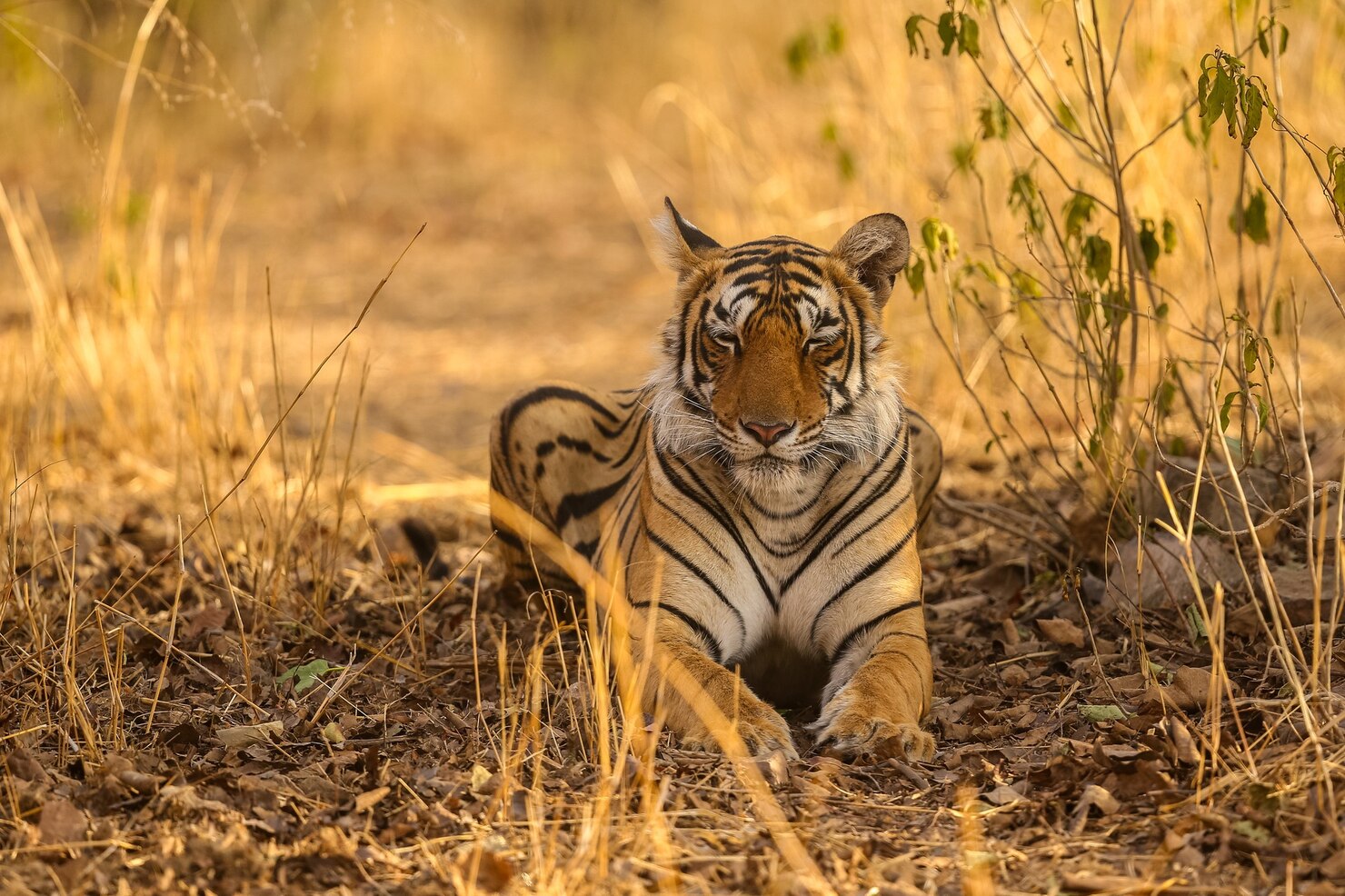
The Bengal Tiger (Panthera tigris tigris) is the unquestioned symbol, and kind of flagship species, for Pilibhit Tiger Reserve. There is this pretty frequent question people ask, like how many tigers live in Pilibhit Tiger Reserve? And well, the answer is one of India's biggest conservation success stories, honestly.
When Pilibhit was first declared as a tiger reserve in 2008, there were barely a dozen tigers across the whole forest. Then by 2020, that count had gone past 90 tigers — an upswing that happened in under 12 years, or so. This standout result brought Pilibhit the TX2 Award from WWF and the Global Tiger Forum in 2020, and in a way made it the first reserve, out of all 13 tiger range countries worldwide, to win that honour.
According to a study by the Wildlife Institute of India (WII), the Dudhwa-Pilibhit tiger population is ecologically unique — these tigers have developed specific behavioural and ecological adaptations to the Terai environment, found nowhere else in the world.
Mammals of Pilibhit Tiger Reserve
Past the tiger, Pilibhit Tiger Reserve holds a surprisingly broad mix of mammals. Anyone trying to get the complete list of the animals inside Pilibhit Tiger Reserve will notice these kinds of species.
Big Predators
Indian Leopard, Sloth Bear, Fishing Cat, Leopard Cat, Jungle Cat, and the seldom seen Rusty-spotted Cat (first recorded here by camera trap in spring 2010, so it became a notable discovery for the Terai region).
Herbivores and Prey Species
Swamp Deer or Barasingha, which is the flagship animal of Terai grasslands, and also a rare and endangered creature. Then there's Sambar Deer, Chital or Spotted Deer, Hog Deer, Barking Deer, Nilgai or Blue Bull. Also the Four-horned Antelope, commonly called Chousingha, Blackbuck, and Wild Boar. These prey types are found in huge numbers, so they keep the whole predator food web of the reserve running.
Elephants
Asian Elephants are regularly seen in Pilibhit Tiger Reserve, using the natural forest corridors that link the reserve with nearby protected areas such as Dudhwa National Park and Kishanpur Wildlife Sanctuary.
Smaller Mammals
Indian Giant Flying Squirrel, Indian Porcupine, Small Indian Civet, Indian Flying Fox, Short-nosed Fruit Bat, Indian Common Yellow Bat, Painted Bat, Rhesus Macaque, Common Langur, Golden Jackal, Bengal Fox, Striped Hyena, and Indian Hare.
This extraordinary mammal diversity makes Pilibhit one of the best destinations in Uttar Pradesh for wildlife safaris and animal sightings in the wild.
Birds of Pilibhit Tiger Reserve
For birdwatchers Pilibhit Tiger Reserve is kinda like a dream destination, seriously. There are over 400 bird species, both resident and migratory, have been recorded within the reserve. So it sits among the top birdwatching spots in North India. If you are planning a birding trip to Pilibhit Tiger Reserve, then the Chuka Wetland and Eco-Tourism Zone is the single most rewarding location you can actually visit.
Resident Bird Species
Sarus Crane (the world's tallest flying bird), Indian Peafowl, Red Junglefowl, Great Hornbill, Indian Grey Hornbill, Oriental Pied Hornbill, Indian Pitta, White-throated Kingfisher, Common Kingfisher, Crested Serpent Eagle, Changeable Hawk-Eagle, Steppe Eagle, White-rumped Vulture, Grey Partridge, Black Partridge, Swamp Francolin, Lesser Whistling Duck, Indian Darter, various Herons and Egrets, Cormorants, Woodpeckers, Orioles, Drongos, Parakeets, and Laughing Thrush.
Migratory Birds — November to February
Big crowds of migratory birds arrive at Pilibhit's wetlands, coming from Central Asia, Siberia and the high Himalayas. You can spot species like the Bar-headed Goose, Ruddy Shelduck, Mallard, Common Teal, the Combed Duck, plus plenty of waders and waterfowl kinds. The Chuka Wetland in those months is a kind of show, honestly, that no birdwatcher should skip.
The presence of several rare and endangered bird species makes Pilibhit Tiger Reserve an important destination for bird conservation and biodiversity protection. All of these are listed as threatened or vulnerable on the IUCN Red List, and that's why the reserve feels especially meaningful for protection work.
Reptiles of Pilibhit Tiger Reserve
The reptile life in Pilibhit Tiger Reserve adds yet another extraordinary layer to its biodiversity, and in a way it makes the whole place seem to "breathe" differently. Inside the reserve the rivers plus wetlands are the residence of the Mugger Crocodile and the critically endangered Gharial — two crocodilian types that are quite distinct, yet they still lean on the same water corridors here.
Mugger Crocodile
Also called Indian Marsh Crocodile, found across the rivers and wetlands of the reserve.
Gharial
What really grabs attention is the Gharial's presence — they're among the rare reptiles on Earth, so even a small count matters far more than it should.
Snake Species
Indian Rock Python, King Cobra, Indian Cobra, Common Krait, and Russell's Viper.
Lizards
The area has the Monitor Lizard and five other lizard varieties.
Freshwater Turtles
Present too, roaming around in the rivers and ponds, which helps round out a rich and pretty diverse reptile community.
Wildlife Corridor — Pilibhit's Role in the Larger Terai Ecosystem
One of the most important, and maybe most overlooked aspects of the Pilibhit Tiger Reserve is its job as a real wildlife corridor in the Terai Arc Landscape. The reserve links up through forest corridors to several major protected areas across India and Nepal.
This connectivity lets tigers, elephants, leopards and other big mammals move freely between reserves, across hundreds of kilometres. That genetic trade between groups is kind of essential for the long term survival of species such as the Bengal Tiger and the Asian Elephant. If there isn't that corridor, then isolated populations would start with inbreeding and end up in a slow decline, eventually.
The River Gomti originates from within Pilibhit Tiger Reserve, and the reserve forms the catchment area for several rivers including Sharda, Chuka, and Mala Khannot. This means Pilibhit is not just important for wildlife — it is directly responsible for the water security of millions of people living downstream.