Things to Do in Pilibhit Tiger Reserve — Complete Activity Guide
Pilibhit Tiger Reserve offers unforgettable wildlife experiences in the heart of Uttar Pradesh's Terai forest. Go on a thrilling jeep safari through dense Sal forests to spot Royal Bengal Tigers, leopards, and sloth bears. Enjoy bird watching near Chuka wetlands where over 400 bird species live. Visit the unique Chuka Beach — a sandy riverside spot inside the jungle on the banks of Sharda Sagar Dam. Try a guided nature walk to explore forest trails up close. Watch crocodiles along the riverbanks and photograph stunning golden hour landscapes.
This is a straight, practical guide to everything you can actually do here — from the obvious things like jungle safari to the lesser-known experiences like watching the sunset from a canal bifurcation point built in 1926. Read it before you go, and you will get far more out of your visit.
Why Pilibhit is Different from Other Tiger Reserves
Many travellers are familiar with popular wildlife destinations like Ranthambore and Jim Corbett. But Pilibhit is something else. It sits right on the India-Nepal border in a narrow strip of Terai forest, and what makes it special is the sheer variety it packs into a small space.
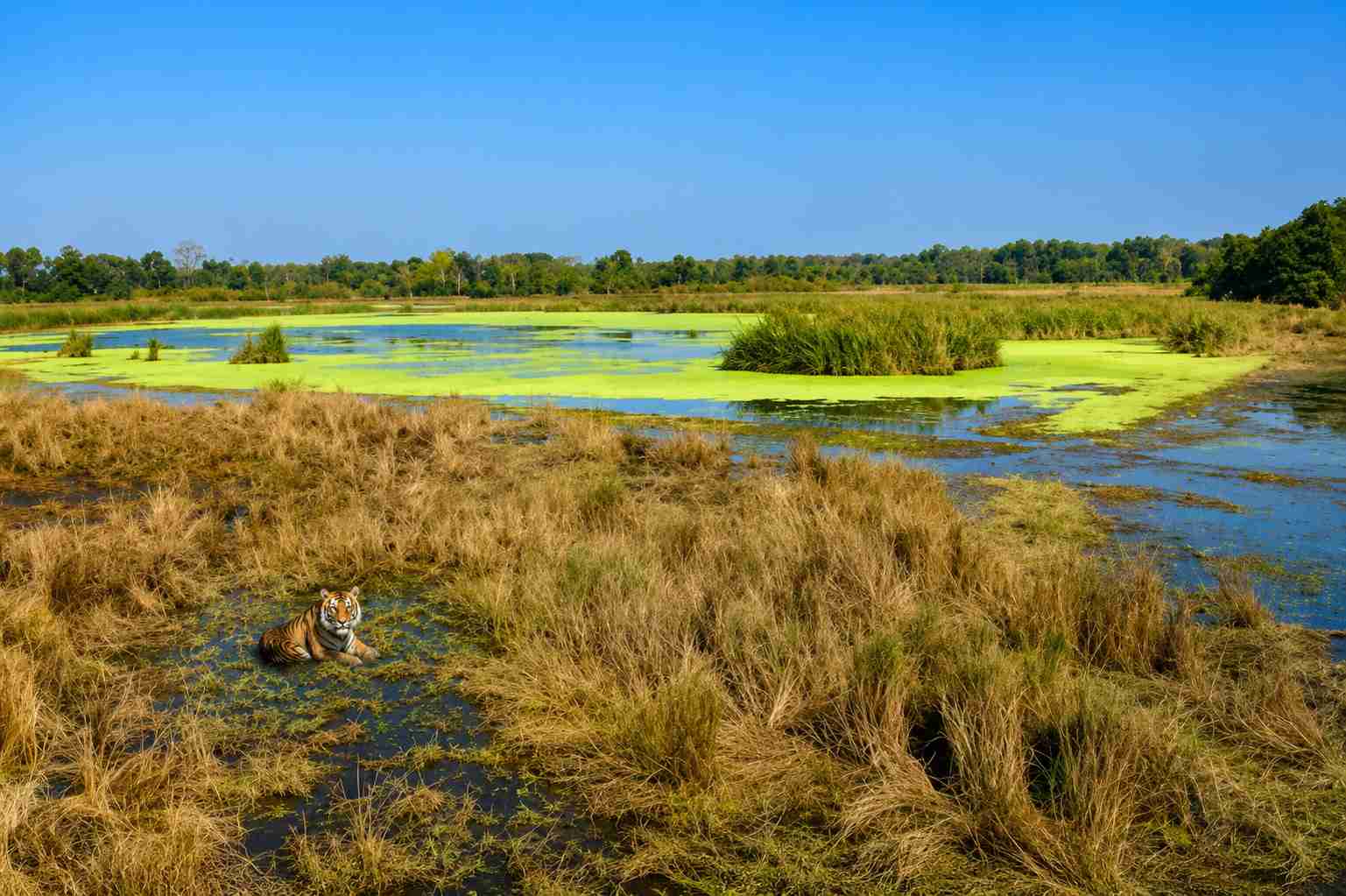
Dense sal forests, open grasslands, a dam reservoir, ancient canals from the British era, and a sandy riverbank that genuinely looks like a beach.
More tigers per square kilometre than almost anywhere else in India — over 90 tigers recorded across 730 sq km of Terai habitat.
Right on the India-Nepal border, forming part of the Terai Arc Landscape — one of Asia's most significant transboundary wildlife corridors.
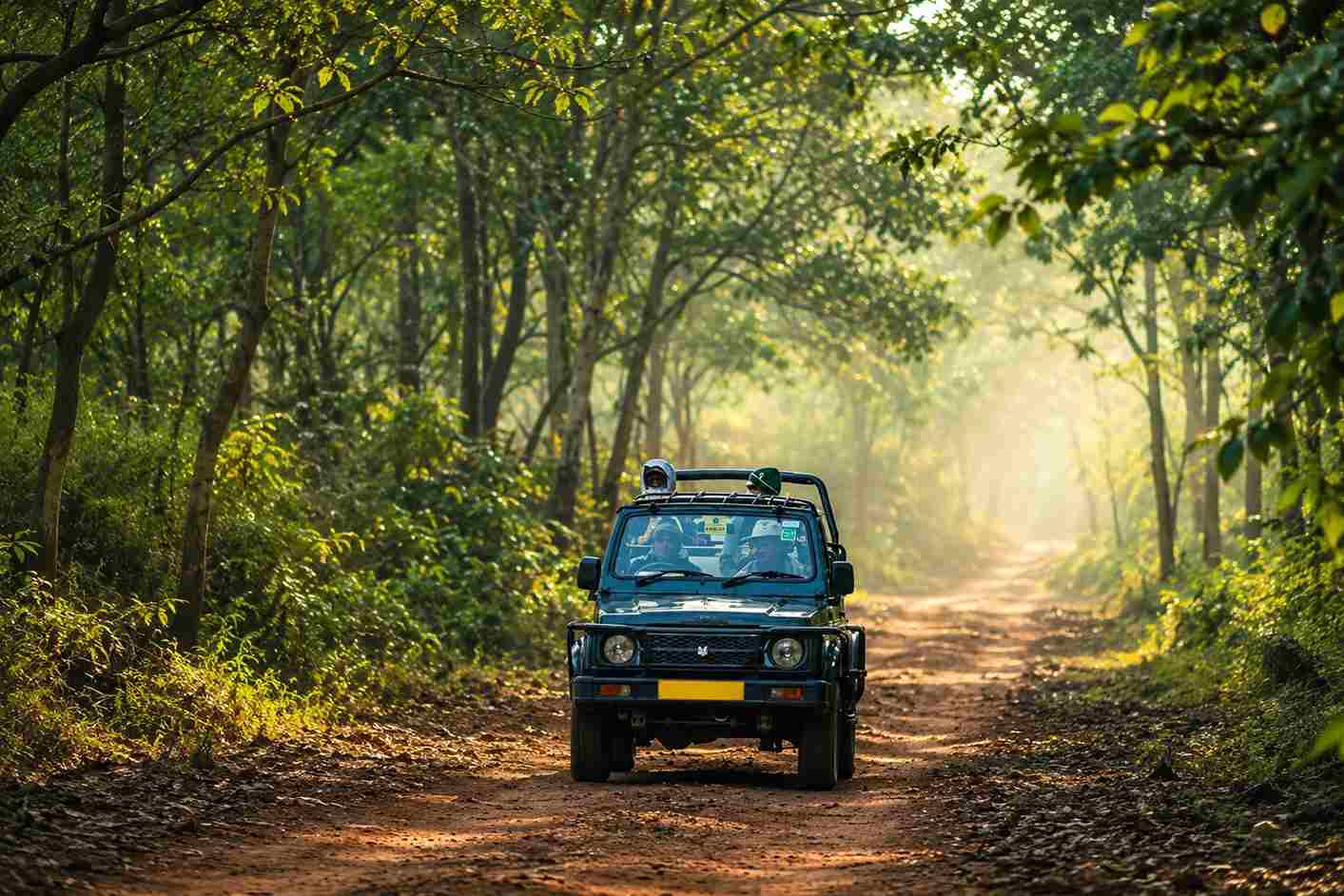
Morning Safari — Best for Tiger Sightings
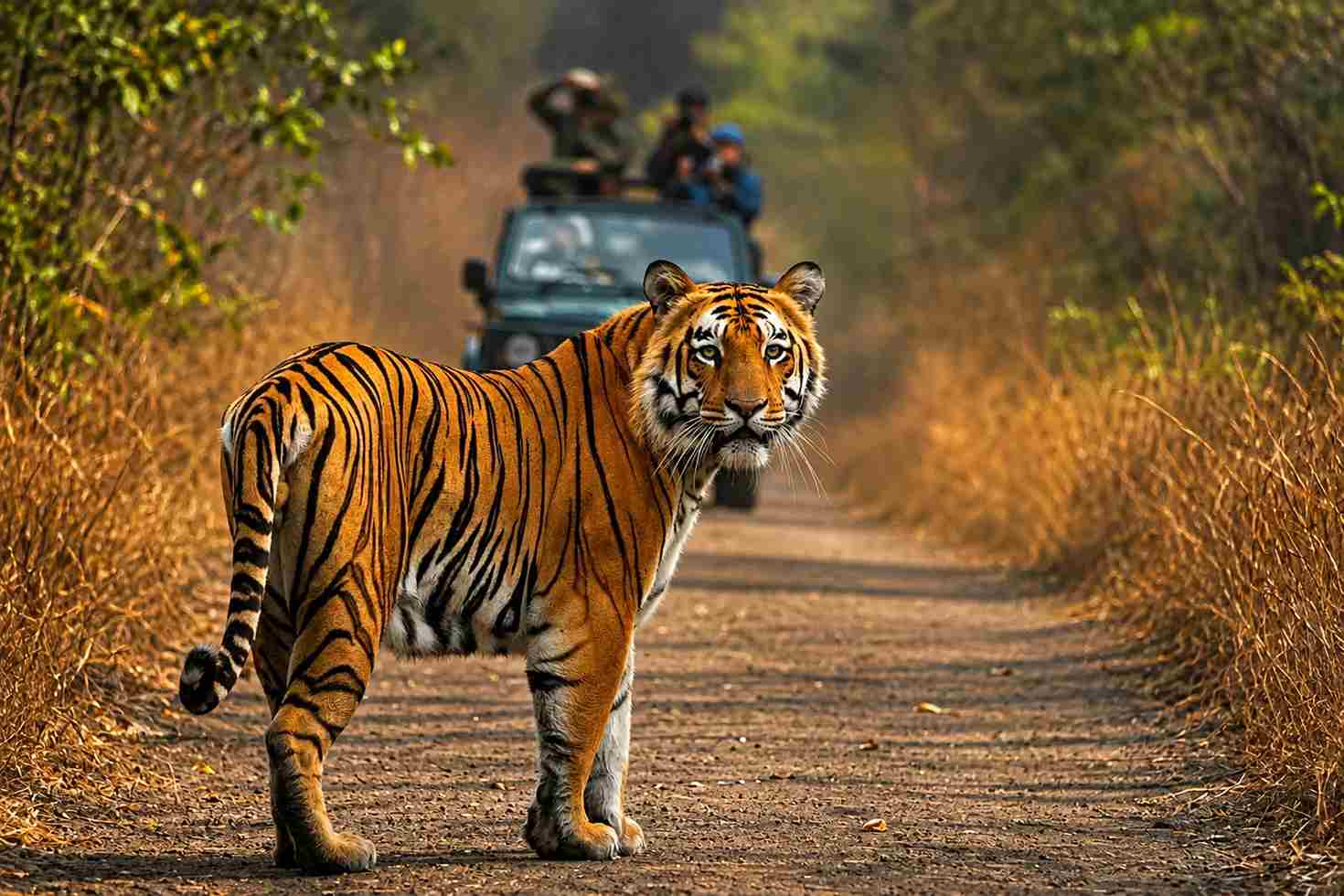
Tigers are most active in the early hours. The morning safari runs from around 6:00 AM and gives you the best natural light, the coolest temperature, and the highest chance of spotting a tiger on or near the road. Animals are moving between water sources and their resting spots at this time. Your guide will watch for fresh pugmarks (paw prints) in the mud as soon as you enter the forest — these tell you where a tiger was within the last few hours.
A jungle safari in Pilibhit is not like visiting a zoo. You ride in an open 4x4 gypsy through actual forest roads, with a trained forest guide sitting beside you, and there is a real chance a tiger will walk across the road in front of you.
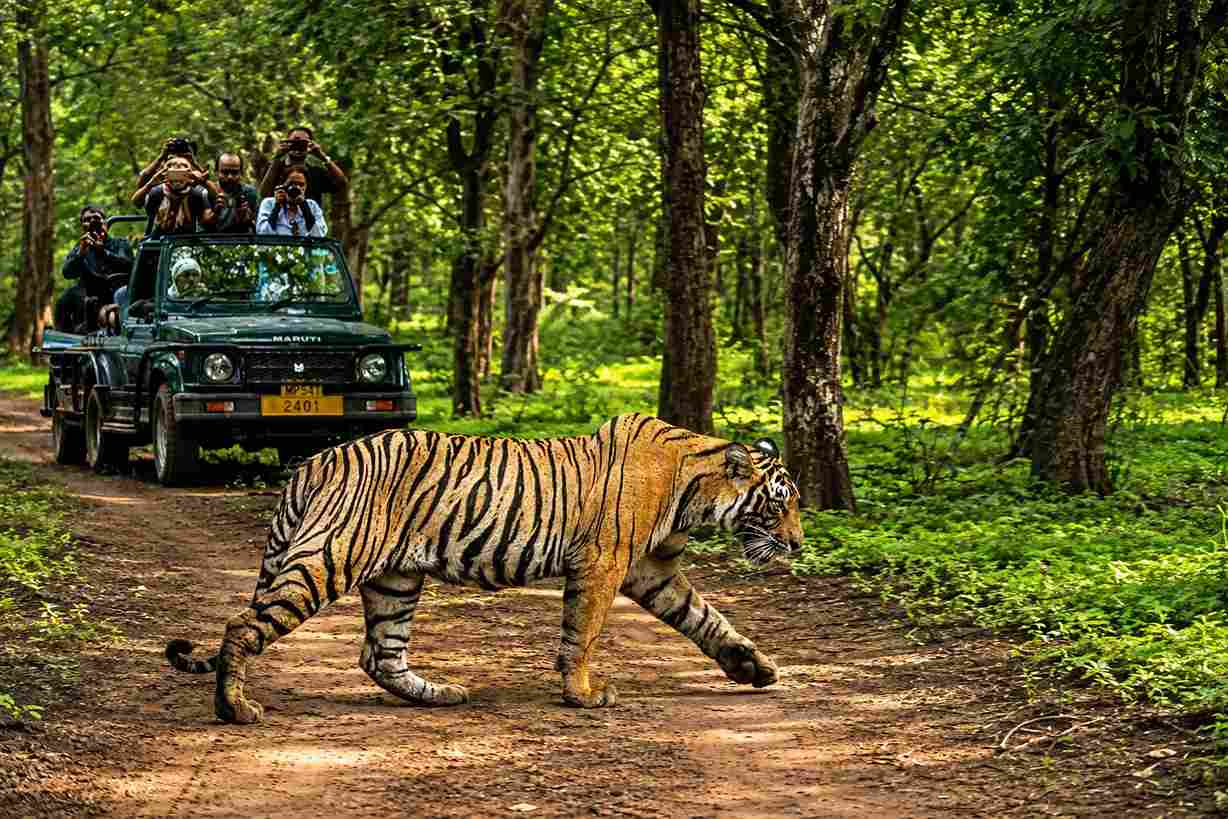
Evening Safari — Beautiful Light, Great Atmosphere
The evening safari starts around 2:00 PM and ends before sunset. Animals become active again in the late afternoon after resting through the heat of the day. The golden light during this time makes for stunning photographs, and you will frequently spot spotted deer (chital), hog deer, and sambar at the edges of the forest.
Tiger sightings happen too, though less often than mornings. The sounds of the jungle change completely in the evening — monkeys call out alarm signals when a predator is near, which is often your first clue that something big is close.
Which Gate to Choose — Mahof, Mustafabad or Barahi
The reserve has two main safari zones. Zone 1 covers the Mahof Range with dense sal forests and historically high tiger sightings. Zone 2 covers the Barahi Range and has wider open grasslands, more water bodies, and is better for spotting a wider variety of wildlife.
Mahof Gate — Zone 1
Quiet, tiger-dense sal forest. Fewer gypsies go in here, so it is quieter and more exclusive. Historically high tiger sightings. Best for serious tiger spotters and wildlife photographers in the early morning.
Barahi Gate — Zone 2
Open grasslands, more variety of species. Better for spotting a wider variety of wildlife including elephants and deer herds. Wider open grasslands and more water bodies make it excellent for family visits and birdwatching.
Mustafabad Gate — Flexible
Offers flexible access to both zones depending on permit availability — making it the most flexible option if you have not decided which zone you want. A good choice for first-time visitors.
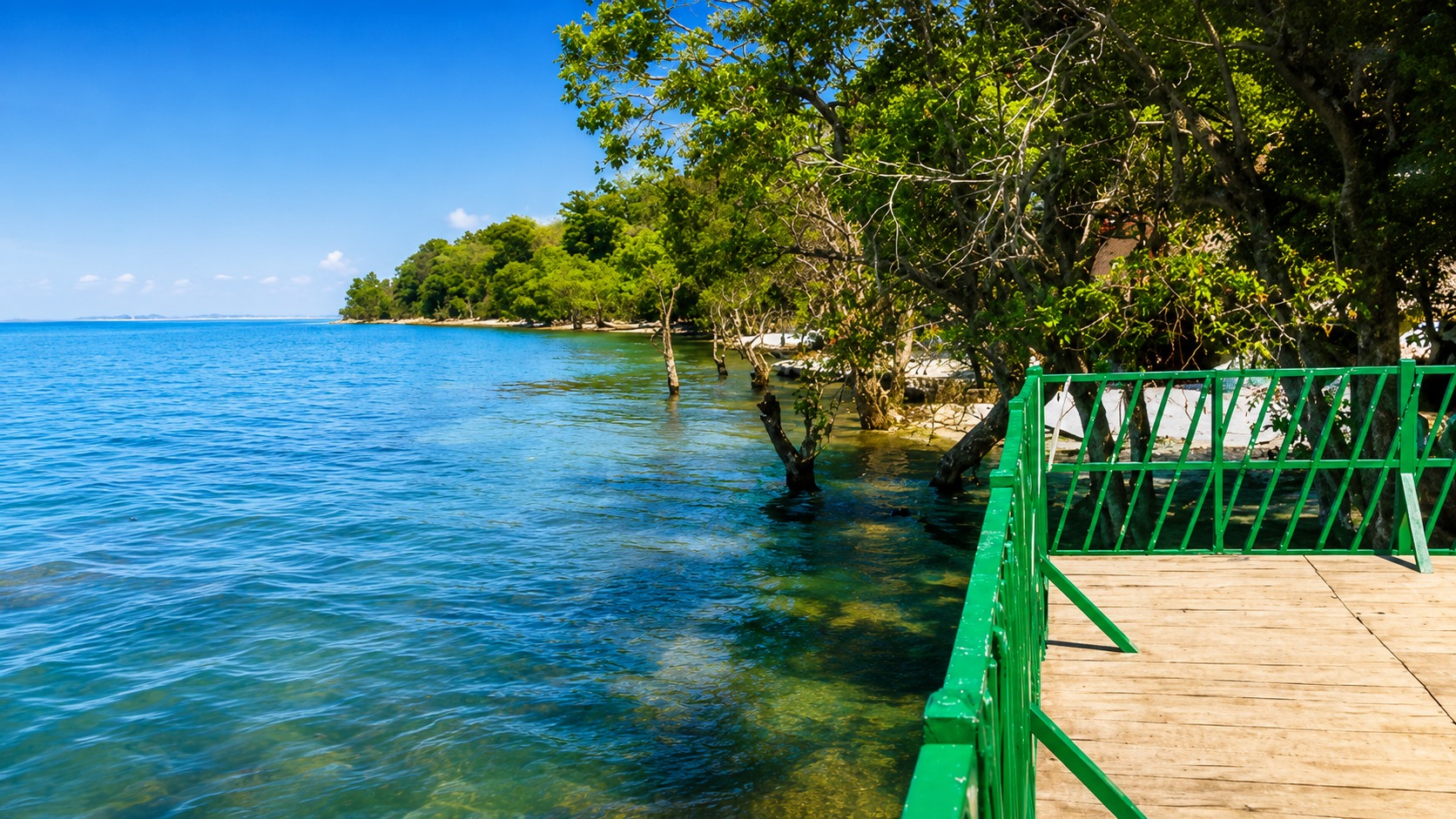
Chuka Beach — A Beach Inside a Forest
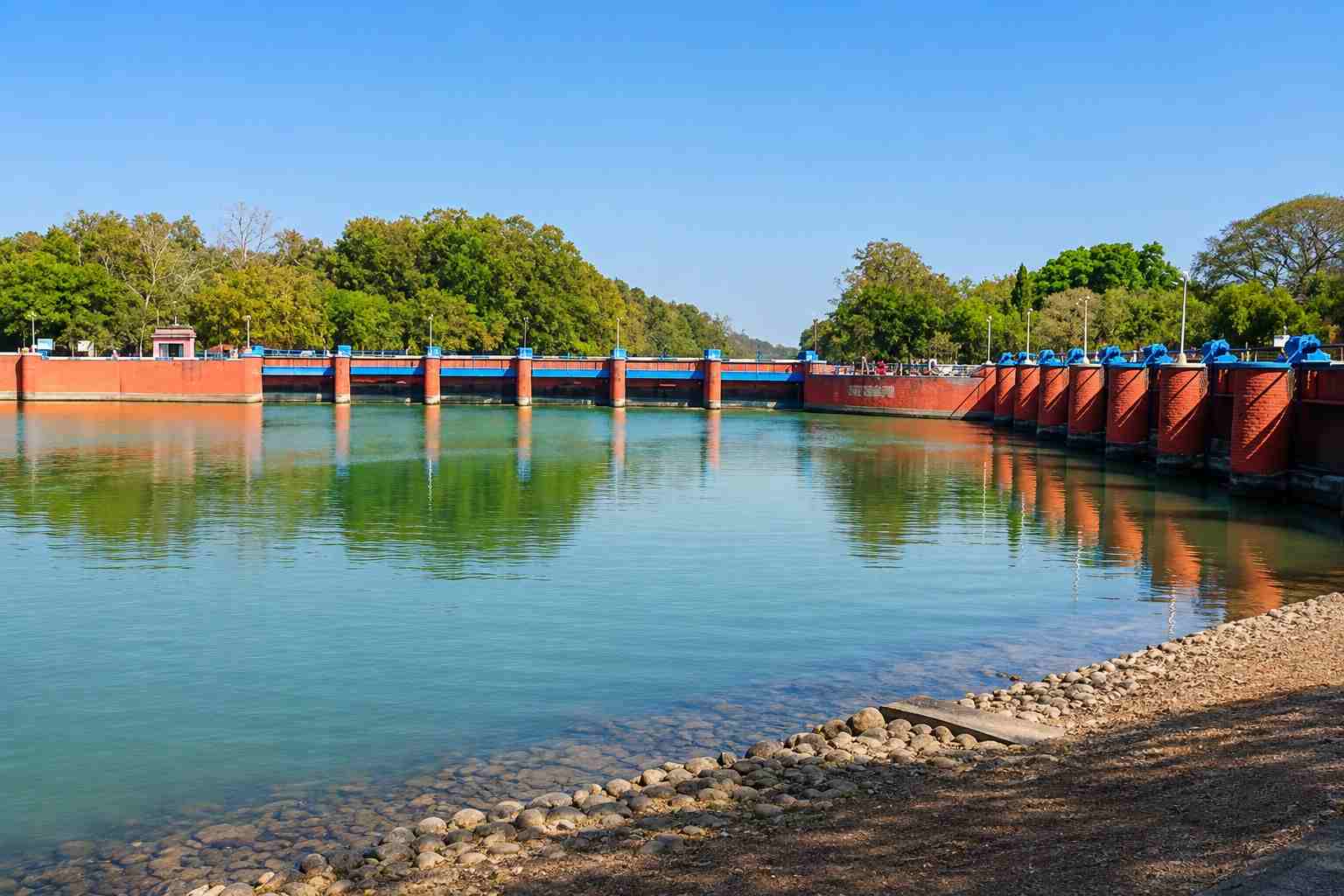
This is the one thing at Pilibhit that surprises every visitor who has not been told about it earlier. Chuka is a sandy riverside patch on the banks of the Sharda River, right where the Sharda Sagar Dam forms a wide, calm reservoir. The sandy edges, wooden paths, bamboo huts and the open water together make a scene that looks nothing like what you expect in the middle of a north Indian tiger reserve.
It is the only beach-like location in Uttar Pradesh and is surrounded entirely by jungle — making it one of the most unique natural attractions in all of North India.
What to Do at Chuka Beach
Boating on the Sharda Reservoir
One of the more quiet activities in Pilibhit is just taking a boat out on the Sharda Sagar reservoir at Chuka. Once you are on the water, you can catch sight of bar-headed geese, tufted ducks, red-crested pochards, and a bunch of herons standing along the banks. Looking at the forest where it meets the water, plus the far off shape of the Himalayan foothills on a clear day, is honestly pretty striking. It is also a decent place for smooth-coated otters. The best time for boating is usually October to March, when migratory birds are around.
Sunrise and Sunset Watching
Chuka has a dedicated sunrise point and a sunset point, both with open views over the water. Sunrise here is worth waking up for — the orange light spreads over the reservoir while the forest sounds slowly shift from night creatures to day birds. Sunset turns the water gold and pink. Wildlife photographers come specifically for this light. If you are staying overnight at the Tharu huts, you can easily catch both without any extra planning.
Stay Overnight — Tharu Hut, Bamboo Hut or Tree House
The accommodation at Chuka is run by the Forest Department and is unlike any hotel stay. Tharu huts are built in the traditional style of the Tharu tribal community who live in the Terai region. Bamboo huts sit closer to the water. The tree house is the most sought-after option — it puts you above ground with a view of the canopy and open sky. At night, the sounds of the jungle are all around you — insects, nightjars, and occasionally the alarm calls of deer that signal a predator is near. Food is vegetarian only, as per Forest Department rules.
Birdwatching at Chuka Wetland
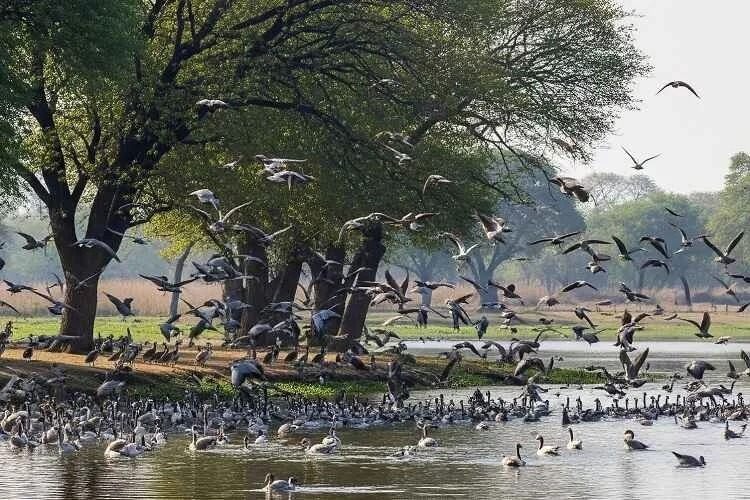
The Chuka Wetland and Eco-Tourism Zone is the single most rewarding location inside the reserve for birdwatching. In winter months migratory birds arrive in massive flocks — bar-headed geese, tufted ducks, common teal, northern pintail, and hundreds of waders. The Chuka reservoir between October and March is particularly spectacular for ducks and geese coming in from Central Asia, Siberia, and the high Himalayas.
Birdwatching — Over 326 Species in One Reserve
If you are a birdwatcher, Pilibhit will genuinely excite you. The combination of dense sal forest, wetlands, grasslands, and the Sharda reservoir creates multiple distinct habitats within one reserve — which is why the bird count is so high. Resident species live here year-round, and migratory birds arrive from Central Asia and the Himalayas between October and March.
Key species to watch for:
A good pair of binoculars (8x42 or 10x42) will transform your experience here. Many of the best birds are in the high canopy or on the far side of water bodies. If you are serious about birds, bring a field guide to North Indian birds — the forest guides know the animals well, but a dedicated birding guide makes a big difference for species identification.
Best places to birdwatch inside the reserve:
Scenic and Historical Points Inside the Reserve
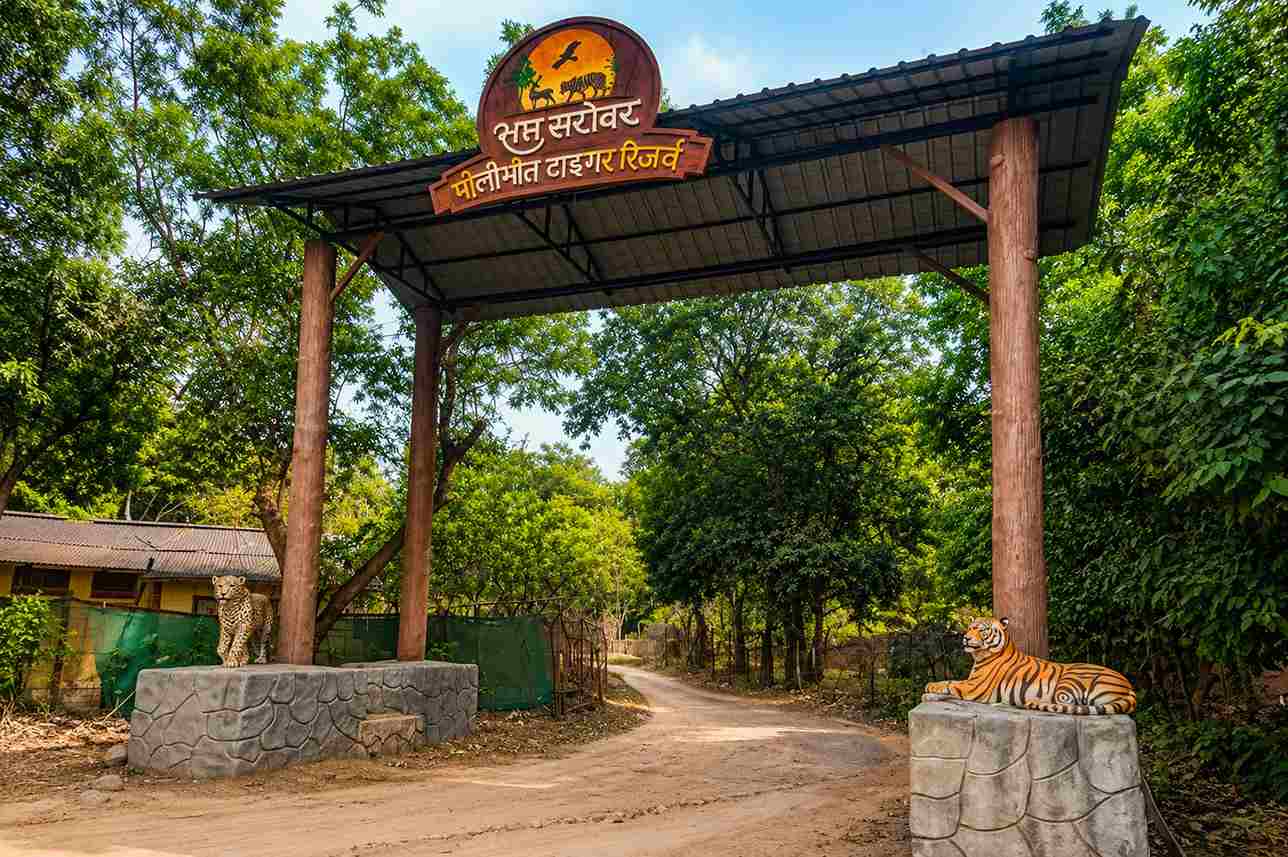
The jungle safari route takes you past several remarkable spots that have nothing to do with tiger sightings — they are interesting on their own terms. Here are the key ones worth knowing before you go.
Bifurcation Point — 1926 British-Era Canal Engineering
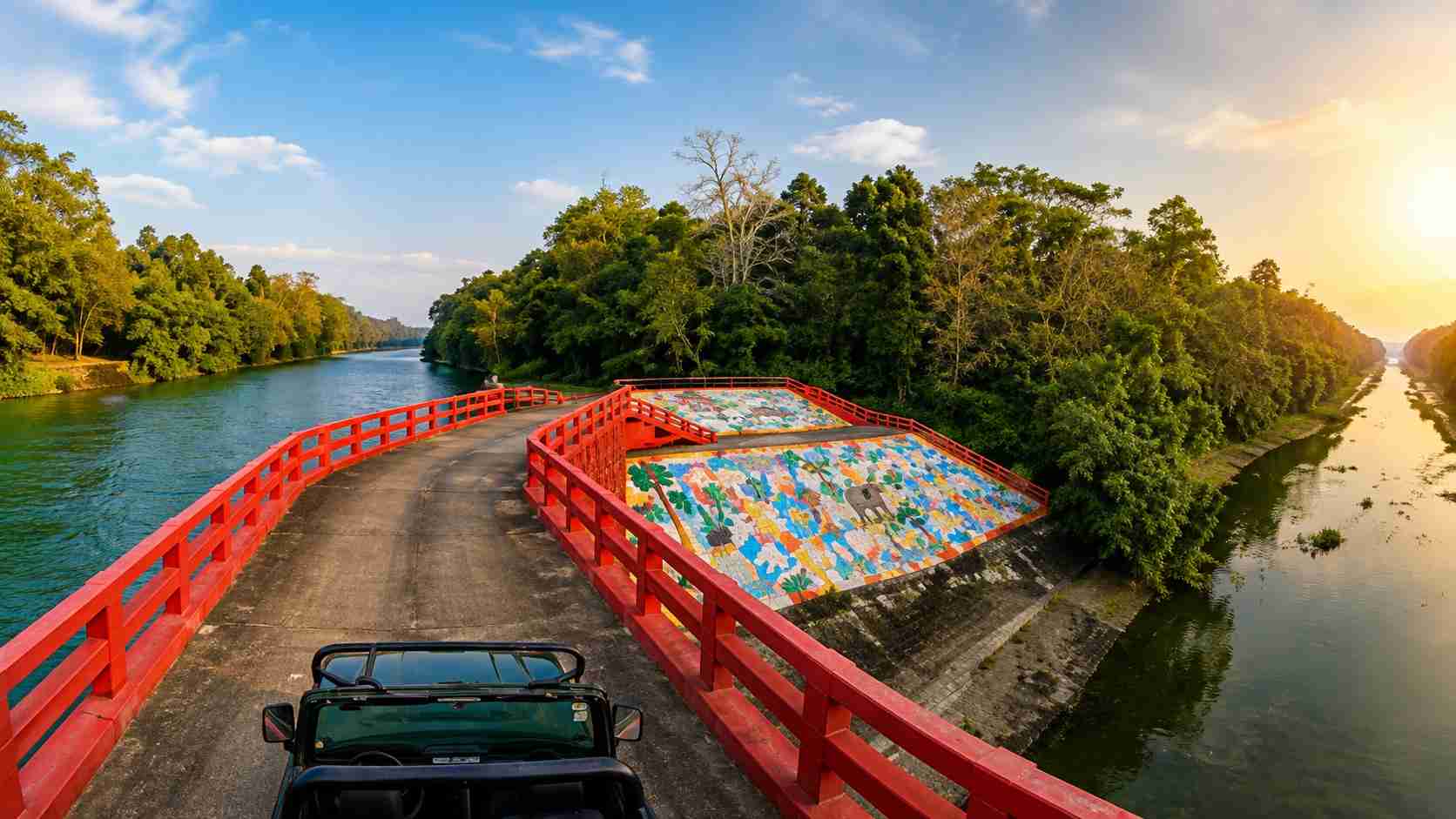
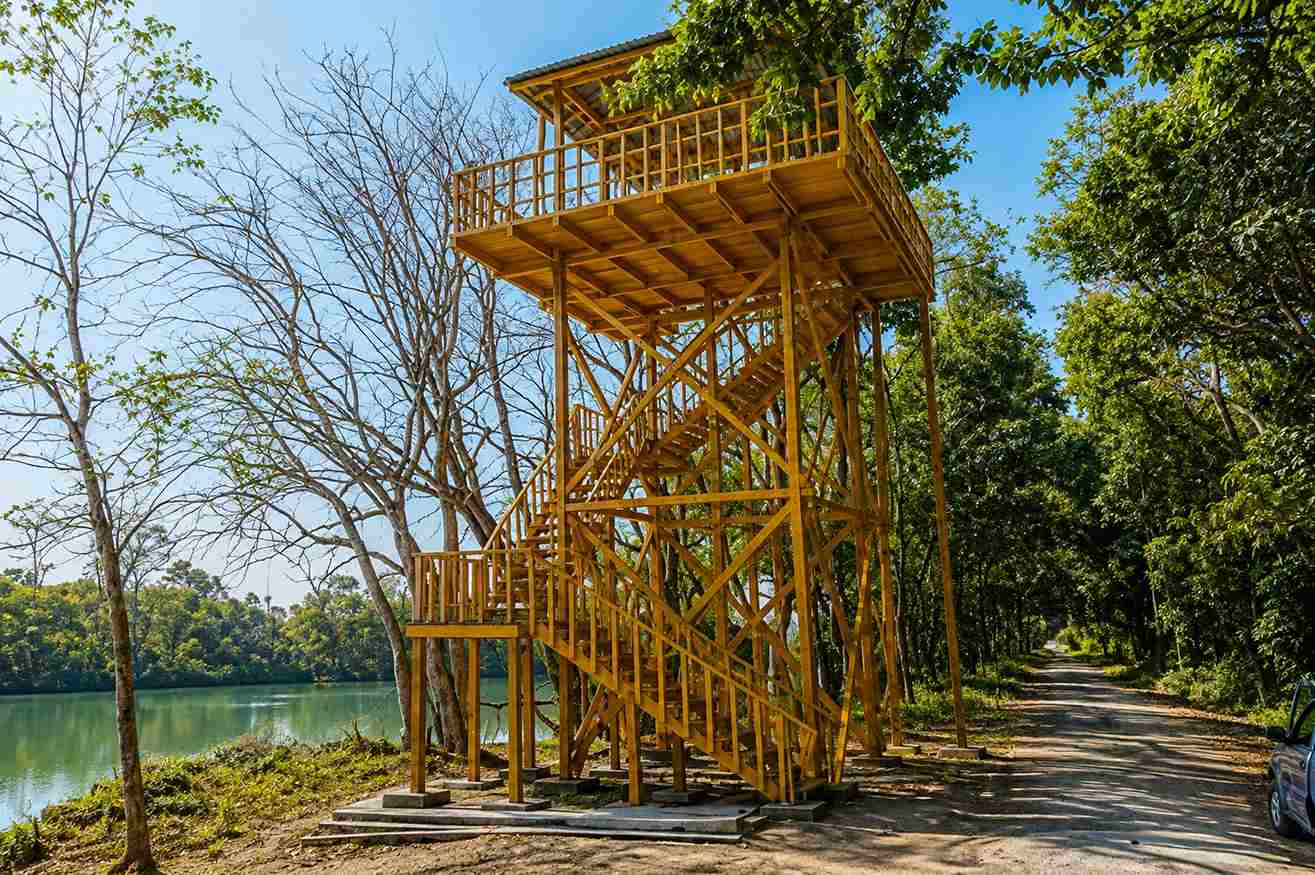
Deep inside the forest, three major canals split off from a single point — the Hardoi Branch, the Kheri Branch, and the Sharda Sagar Feeder Channel. This structure was built in 1926 under British rule. Standing here today, you see a wide, moving mass of water dividing into three directions, with forest on all sides. It is a beautiful spot where engineering and nature have merged over a century. Migratory birds rest on the canal banks here during winter months.
Siphon Canal Point — Two Canals Crossing Each Other
This is one of the more unusual sights in the reserve. Two canals cross at different levels — the Kharja Canal (which flows from the Sharda Sagar Dam) passes underneath, while the Khiri Branch passes above. Looking at it from the road, it genuinely looks like one canal is floating over another. It is a hydraulic engineering structure from the colonial period that still works today, and it sits right in the middle of the forest.
Sapt Sarovar — The Seven Lakes
Located in the Barahi Range, Sapt Sarovar (meaning seven lakes) is what remains of an old outlet canal that was closed when Sharda Sagar Dam was built in 1951. The abandoned canal has formed seven connected water bodies over the decades, surrounded by sal and teak trees. It was originally dug by prisoners during British rule. Today it is a quiet, beautiful spot ideal for photography and peaceful walks along the waterside.
Jhand Taal — The Hidden Wetland
Jhand Taal sits right on the border between the Mahof and Barahi ranges. It was created for the Genda (one-horned rhino) project decades ago and is named after the dense jhad-jhankad undergrowth vegetation around it. Today it is a calm wetland that sees far fewer visitors than the main safari points. Crested Serpent Eagles, Common Moorhen, and Common Teal are regularly spotted here. If you want a quiet, uncrowded spot to just sit and watch wildlife, this is the one.
Laal Pul — The Red Bridge
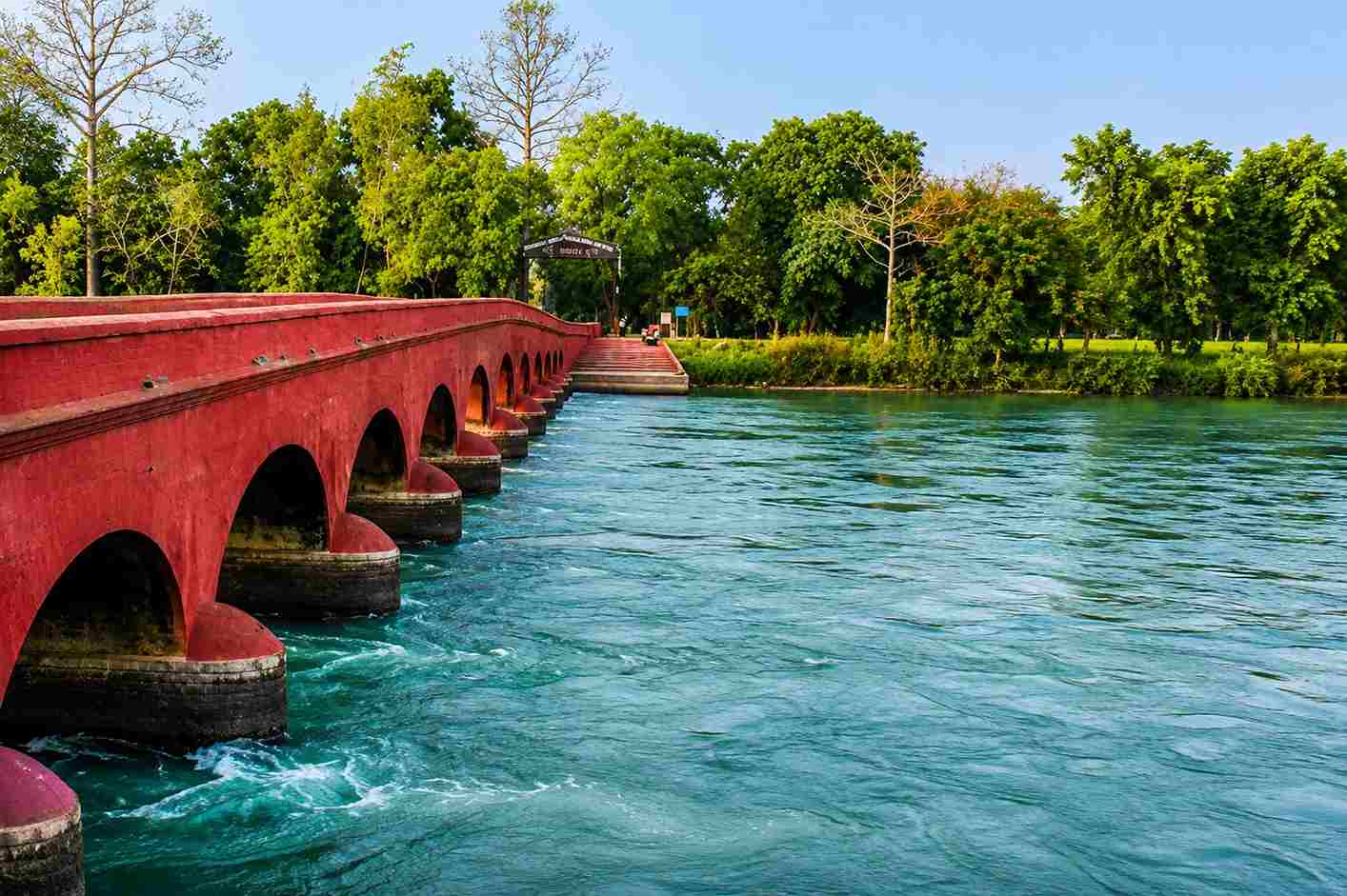
Located near Chuka, the Laal Pul (Red Bridge) is a British-era bridge built from distinctive red clay. It is one of 14 old bridges in the reserve and stands on the main Sharda canal. It is named for its colour, which still stands out against the surrounding green forest. A quiet stop on any safari route, it is a good example of how much colonial-era infrastructure quietly runs through this jungle.
Barasingha Taal — Where the Swamp Deer Graze
Barasingha (swamp deer) are an endangered species that prefer marshy grassland, and this wetland inside the reserve is named for them because herds regularly come here to graze. It is also a good spot for common kingfishers, grey herons, and gadwall during winter months. If you are specifically interested in seeing barasingha, tell your guide before the safari begins and ask to route via this spot.
Wildlife and Landscape Photography
Pilibhit is a serious destination for photographers. The variety of subjects — tigers, leopards, birds, canal structures, the beach, sunrises, and tribal life — makes it genuinely rich material. Golden hour is real here. The first 90 minutes after sunrise and the last 60 minutes before sunset give you warm, directional light that makes wildlife photography come alive.
- Never ask your driver or guide to move the vehicle closer to an animal for a better shot
- Flash photography is prohibited. Use high-ISO settings instead
- Do not play animal calls from speakers to attract birds — this is harmful to bird behaviour and is banned inside the reserve
Nature Walks and the Nature Interpretation Centre
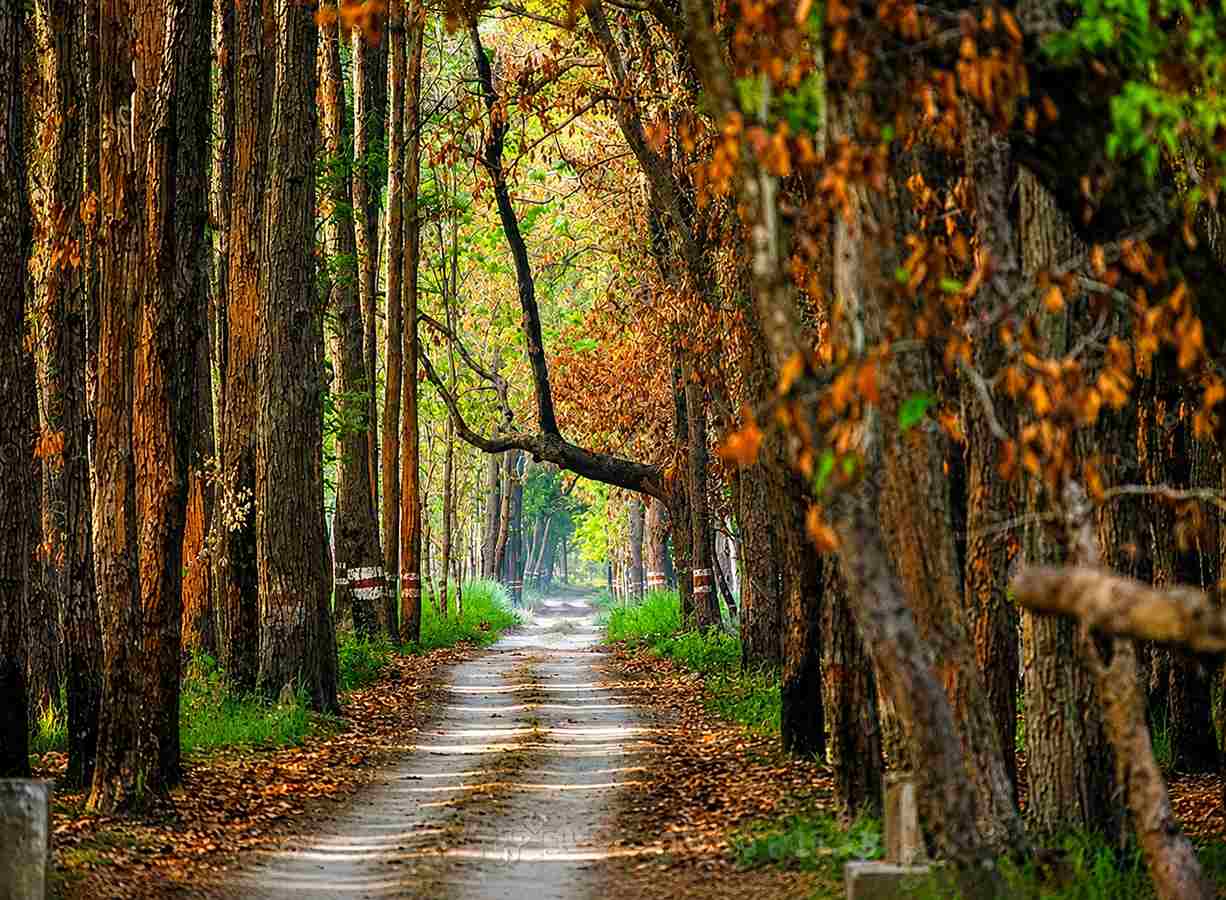
Not every great experience at Pilibhit involves a gypsy. Slowing down and walking inside or at the edge of the forest gives you access to things you completely miss from a moving vehicle — insect sounds, bird calls, animal tracks in soft mud, medicinal plants used by the Tharu community, and the general sensation of being genuinely inside a wild ecosystem.
Guided Walking Safari
Walking safaris in the designated areas of the reserve are carried out with a trained naturalist, who can talk you through what you're seeing — from a scratch mark on a tree trunk (a territory label by a big cat) all the way to the difference between sambar dung and deer dung. You'll also spot the smaller creatures that most gypsy passengers always seem to skip, like frogs, lizards, butterflies, bees in the sal flowers, and even the odd python sunbathing across a track during autumn. Closed shoes are essential for these walking trips.
Nature Interpretation Centre
Near the main gate of the reserve, the Nature Interpretation Centre is the ideal place to begin your visit especially if you have children with you or if you want more context before entering the forest. It has animal models, forest dioramas, information boards about the reserve's ecosystems, and educational content about Pilibhit's tiger conservation story. Spending 30 to 45 minutes here will make everything you see on the safari more meaningful. It is not widely advertised, so most visitors skip it — which also means it is never crowded.
Tharu Village Visit — Meet the People of the Forest
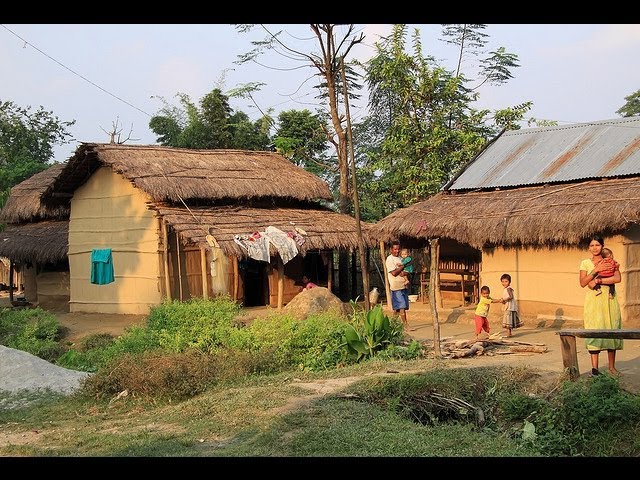
The Tharu community has lived in the Terai region for centuries and has a deep relationship with the forest that no textbook can explain. A visit to a Tharu village near Pilibhit Tiger Reserve is not a tourist show — it is a genuine window into a way of life that is becoming increasingly rare.
The Tharu people are traditionally forest-dwellers who co-existed with tigers, elephants, and crocodiles for generations. During a village visit — usually arranged as part of a full-day tour or overnight package at Chuka — you can see traditional Tharu mud-and-bamboo houses, watch craftspeople making handwoven products, try local food, and hear stories about how the community's relationship with the reserve has changed since it became a protected tiger reserve.
The huts at Chuka Beach are built in Tharu style — staying in one is itself a form of experiencing this culture. If you buy any handicrafts, buy directly from the makers. It makes a real difference to their income.