How Pilibhit Tiger Reserve is Divided
Pilibhit Tiger Reserve is spread across five main forest ranges — Mahof, Barahi, Mala, Haripur, and Deoriya. Together these ranges cover approximately 730 sq km of Terai forest in Uttar Pradesh near the India-Nepal border. Each range has its own landscape, wildlife character, and things to see.
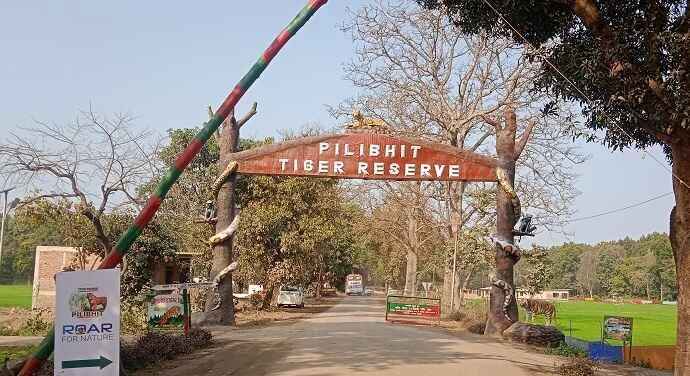
For visitors, the Pilibhit forest currently operates safari from three main entry gates — Mahof Gate, Barahi Gate, and Mustafabad Gate (also called Chuka Gate). These gates give access to the two primary tourist safari zones: Zone 1 (Mahof Range) and Zone 2 (Barahi Range). The Mala, Haripur, and Deoriya ranges are part of the larger reserve boundary and are less frequently accessed by tourists but are an important part of the wildlife corridor.
Mahof Range
Mahof Range is the most well-known and most visited safari zone in Pilibhit Tiger Reserve. It is covered with tall, dense Sal trees that create a thick canopy over the forest roads. When you enter Mahof Gate in the early morning, the forest road is quiet, often covered with mist, and the chances of finding fresh tiger pugmarks in the mud are very high.
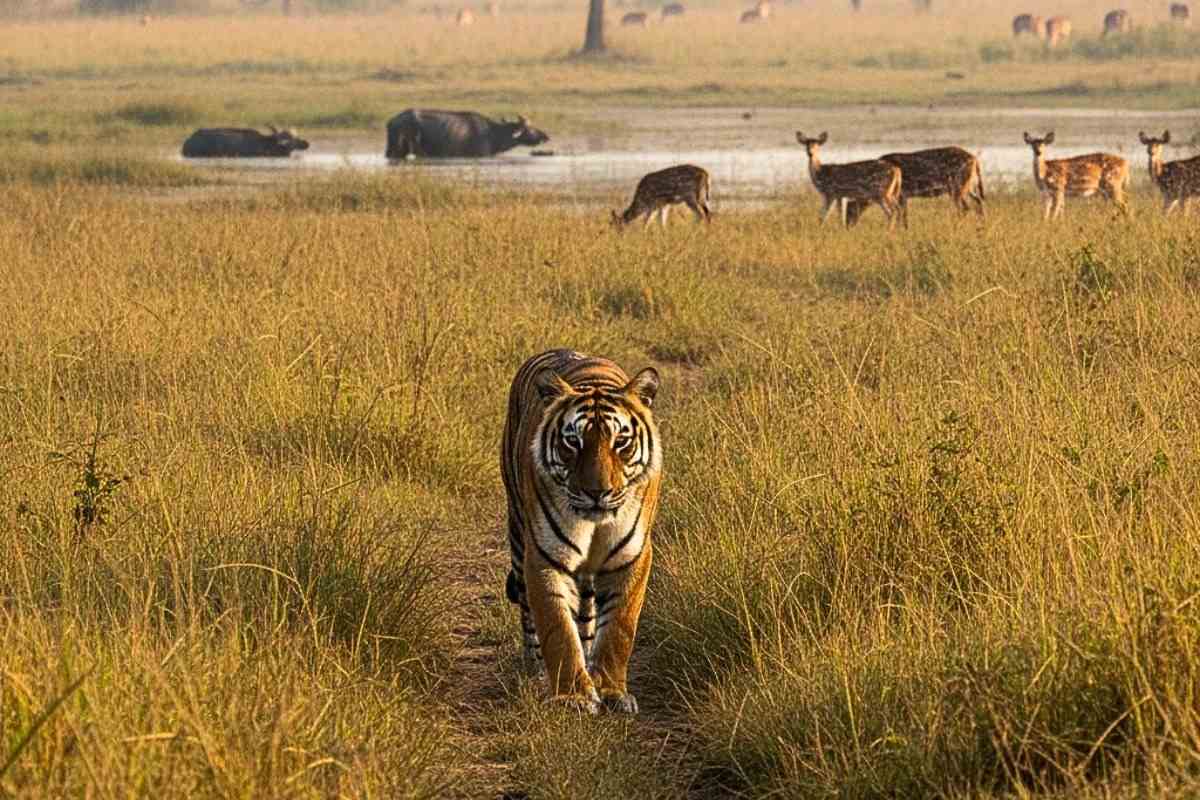
This zone is part of the core area of PTR and has historically recorded the highest tiger sightings among all zones. The famous Chuka Tigress and other well-known tigers of PTR are frequently seen in or near the Mahof Range. The dense vegetation gives tigers excellent cover, and they often walk along the forest roads at dawn and dusk. Your guide will read pugmarks, listen to alarm calls of spotted deer and langurs, and scan the forest edges carefully as you move through this zone.
Apart from tigers, Mahof Range is excellent for spotting leopards, sloth bears, spotted deer, sambar, hog deer, wild boar, and a wide variety of forest birds. The tall Sal trees attract hornbills, woodpeckers, and orioles. The zone also has watchtowers at key points that give you an elevated view of open clearings — ideal for photography and wildlife watching.
Barahi Range
Barahi Range offers a completely different jungle experience compared to Mahof. Instead of dense closed-canopy forest, you enter into a more open landscape of wide grasslands, wetlands, and marshes. This open terrain makes it easier to spot wildlife at a distance, and the variety of animals you can see here is broader than any other zone in PTR.
The grasslands of Barahi are home to large herds of spotted deer, sambar, and swamp deer (barasingha) — an endangered species that is rarely seen in other reserves. The zone has more water bodies than Mahof, which means more animal activity around the edges. Tigers regularly pass through this zone, and the more open terrain sometimes allows for longer, clearer sightings when a tiger does show up. Elephants also move through the Barahi Range more often than the denser zones.
The wetland and marshy areas of Barahi are excellent for crocodile sightings along the canal and river edges. Mugger crocodiles and gharials are frequently spotted basking on the banks in the morning. For birdwatchers, the open grasslands and water bodies together make Barahi a very productive zone — black-necked storks, woolly-necked storks, herons, and egrets are all commonly seen here.
Mustafabad Zone (Chuka Gate)
Mustafabad Gate, also known as Chuka Gate, is the most flexible entry point in Pilibhit Tiger Reserve. From this gate, visitors can be directed to either Zone 1 (Mahof Range) or Zone 2 (Barahi Range) depending on permit availability on the day of safari. This makes it an excellent choice for first-time visitors who have not decided which zone to explore, or for those visiting on short notice.
But the real reason most visitors come to Mustafabad Gate is the Chuka Eco-Tourism area — one of the most unique natural attractions in all of Uttar Pradesh. Chuka is a sandy riverside spot sitting on the banks of the Sharda Sagar Dam deep inside the forest. It looks and feels like a beach, with wide sandy banks, open water, bamboo huts, and the forest on all sides. It is unlike anything else you will find in a North Indian wildlife reserve.
The Chuka zone has its own forest trails along the Sharda Sagar reservoir where the Chuka Tigress — a well-known individual tiger — has been photographed many times. The open scrubland and shrub habitat around Mustafabad Gate supports Indian Bush Lark, Zitting Cisticola, Pied Bush Chat, and other ground-nesting birds that are rarely spotted in the denser zones. Winter migrants like Bluethroat and Siberian Stonechat are also regularly seen here between November and February.
Mala Range
Mala Range covers the northern part of Pilibhit Tiger Reserve and shares a boundary very close to the India-Nepal border. It is one of the five official forest ranges of PTR and is known for having a very high tiger density — some wildlife researchers specifically highlight Mala as one of the most tiger-rich areas in the entire reserve.
Because it is further from the main tourist entry gates and sees far fewer visitors than Mahof or Barahi, the Mala Range offers an experience that feels genuinely wild and undisturbed. The forest here has a mix of sal trees and more open woodland, with grassy clearings that tigers use for resting during the day. Forest rest house accommodation is available at Mala — staying here puts you inside the reserve itself, away from the crowd completely.
Bird diversity in the Mala Range is very high due to its location near the Nepal border — species from the Himalayan foothills mix with Terai lowland species here. It is a particularly good zone for those who want to experience PTR without the company of many other tourist vehicles. The forest roads here are less worn and feel more raw than the main zones.
Haripur Range
Haripur Range covers the eastern part of Pilibhit Tiger Reserve and is defined by its rich wetland and riverine habitat. Rivers, streams, and seasonal water channels run through this range, creating a landscape that is very different from the dry sal forests of Mahof or the open grasslands of Barahi. This wet, waterlogged terrain makes Haripur Range the best zone in PTR for bird watching.
The combination of shallow water bodies, reed beds, and forest edges here attracts an exceptional variety of waterbirds. Leopards are frequently spotted in this range — the Haripur terrain of dense bushes, riverbanks, and broken terrain suits leopards much better than the open forests preferred by tigers. While tiger sightings do happen in Haripur, if you are specifically hoping to see a leopard, this is the zone to target.
During the winter months, the wetlands of Haripur Range fill up with migratory waterbirds from Central Asia and the Himalayan region. Ducks, geese, waders, storks, and herons arrive in large numbers between November and February, making it a spectacular destination for birdwatchers during this period. Mugger crocodiles are also regularly seen basking on the muddy banks of the rivers and channels that run through this range.
Deoriya Range
Deoriya Range sits at the central and western part of Pilibhit Tiger Reserve and plays a critical role as a wildlife corridor connecting the other ranges of PTR. Animals moving between Mahof, Barahi, Mala, and Haripur often pass through Deoriya, making it an active movement zone where a variety of species can be spotted even on a short safari.
Leopards are particularly associated with the Deoriya Range. The mixed forest cover here — a combination of sal, teak, and shrubby undergrowth — provides ideal leopard habitat. Unlike tigers, which prefer open areas to walk, leopards like the kind of broken, dense terrain that Deoriya offers. If you have already done a tiger-focused safari in Mahof and want to try your luck at a leopard sighting, Deoriya is the zone to request.
Large herbivores like spotted deer, sambar, nilgai (blue bull), and wild boar are very commonly seen in this range. The forest here also has several old British-era structures — small bridges and canal channels — that make for interesting photography beyond the wildlife. The Laal Pul (Red Bridge) is one such historic landmark located in this part of the reserve, built from distinctive red clay and still standing on the main Sharda canal.